


As a leading supplier of industrial anti - corrosion coatings, I've witnessed firsthand the critical role that uniform coating plays in achieving optimal corrosion protection. In this blog, I'll share some application techniques that can help you achieve a uniform coating for your industrial projects.
Surface Preparation
The foundation of a uniform coating lies in proper surface preparation. A clean, smooth, and well - prepared surface ensures better adhesion of the anti - corrosion coating and helps to distribute the coating evenly.
Cleaning
The first step is to remove all contaminants from the surface. This includes dirt, grease, oil, rust, and old paint. Depending on the nature of the contaminants and the substrate material, different cleaning methods can be employed. For light dirt and grease, a simple solvent cleaning may suffice. However, for heavy rust or scale, abrasive blasting is often the most effective method. Abrasive blasting uses high - pressure air to propel abrasive materials such as sand, grit, or shot at the surface, removing the rust and creating a rough profile that promotes coating adhesion.
Profiling
After cleaning, the surface should be profiled to a specific roughness. A proper profile provides more surface area for the coating to adhere to. The ideal profile depth depends on the type of coating being used. For example, some high - performance coatings may require a deeper profile to ensure good adhesion. Profiling can be achieved through abrasive blasting or mechanical methods such as grinding.
Surface Inspection
Once the surface is prepared, it should be thoroughly inspected. Any remaining contaminants or areas with improper profiling should be re - worked. A surface that is free of defects will result in a more uniform coating application.
Coating Selection
Choosing the right coating is crucial for achieving a uniform coating. Different coatings have different properties, such as viscosity, drying time, and application methods.
Viscosity
The viscosity of the coating affects its flow and leveling characteristics. A coating with too high a viscosity may not flow evenly over the surface, resulting in a non - uniform coating. On the other hand, a coating with too low a viscosity may run or sag. It's important to select a coating with the appropriate viscosity for the application method and the substrate. Some coatings can be thinned to adjust the viscosity, but this should be done according to the manufacturer's instructions.
Drying Time
The drying time of the coating also impacts the uniformity of the coating. If the coating dries too quickly, it may not have enough time to level out, leading to an uneven surface. Conversely, if the drying time is too long, the coating may be more prone to dust and debris settling on it. Consider the environmental conditions, such as temperature and humidity, when choosing a coating with a suitable drying time.
Compatibility
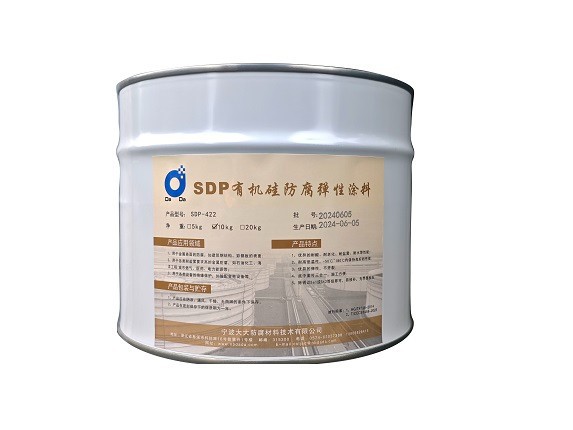
The coating should be compatible with the substrate material. For example, some coatings may not adhere well to certain metals or plastics. Make sure to select a coating that is specifically designed for the substrate you are working with. As an industrial anti - corrosion coatings supplier, we offer a wide range of coatings, including High Temperature Corrosion Resistant Coatings and Silicone Anti-corrosion Elastic Coating, which are compatible with various substrates and have excellent anti - corrosion properties.
Application Methods
There are several application methods available for industrial anti - corrosion coatings, each with its own advantages and limitations.
Brush Application
Brush application is a simple and cost - effective method. It allows for precise control, especially in hard - to - reach areas. However, it can be time - consuming and may result in brush marks if not done properly. To achieve a uniform coating with a brush, use long, smooth strokes and apply the coating in thin layers. Overloading the brush can lead to uneven application.
Roller Application
Roller application is faster than brush application and can cover large areas quickly. It is suitable for flat surfaces. When using a roller, choose the right nap length for the coating and the surface. A shorter nap is better for smooth surfaces, while a longer nap can be used for rough surfaces. Roll the coating in a consistent pattern, such as in a “W” or “M” shape, to ensure even coverage.
Spray Application
Spray application is the most common method for achieving a uniform coating on large surfaces. It provides a smooth and even finish. There are different types of spray guns, such as air - assisted airless, airless, and conventional air spray. Each type has its own characteristics.
- Air - assisted airless spray: This method combines the advantages of airless and air spray. It can produce a fine atomization and a uniform coating at a relatively high application rate.
- Airless spray: Airless spray is suitable for applying thick coatings. It uses high pressure to force the coating through a small orifice, creating a fan - shaped spray pattern. However, it may require more skill to operate to achieve a uniform coating, especially at the edges.
- Conventional air spray: Conventional air spray uses compressed air to atomize the coating. It is ideal for applying thin coatings and can provide a very smooth finish. But it has a lower transfer efficiency compared to air - assisted airless and airless spray.
Environmental Conditions
The environmental conditions during coating application can significantly affect the uniformity of the coating.
Temperature
The temperature of the substrate and the environment should be within the recommended range for the coating. If the temperature is too low, the coating may not dry properly or may have poor flow characteristics. If the temperature is too high, the coating may dry too quickly, leading to an uneven finish. Most coatings have a specified temperature range for application, usually between 10°C and 35°C.

Humidity
High humidity can cause problems such as moisture entrapment in the coating, which can lead to blistering and poor adhesion. Low humidity can cause the coating to dry too quickly. It's important to monitor the humidity levels and adjust the application process accordingly. In some cases, dehumidifiers or heaters may be used to control the environmental conditions.
Ventilation
Proper ventilation is essential during coating application. It helps to remove solvent vapors and prevent the build - up of fumes. Good ventilation also ensures a more consistent drying process, which contributes to a uniform coating.
Quality Control
Quality control is an important part of achieving a uniform coating.
Wet Film Thickness Measurement
During application, the wet film thickness should be measured regularly. This can be done using a wet film thickness gauge. Maintaining the correct wet film thickness is crucial for achieving the desired dry film thickness and uniform coating performance.
Dry Film Thickness Measurement
After the coating has dried, the dry film thickness should be measured. This can be done using magnetic or eddy - current thickness gauges, depending on the substrate material. The dry film thickness should meet the specified requirements for the coating. Any areas with insufficient or excessive dry film thickness should be re - coated.
Visual Inspection
A visual inspection should be carried out to check for any defects such as runs, sags, orange peel, or pinholes. If any defects are found, they should be corrected immediately.
Conclusion
Achieving a uniform coating of industrial anti - corrosion coatings requires attention to detail in surface preparation, coating selection, application methods, environmental conditions, and quality control. By following these application techniques, you can ensure that your industrial equipment and structures are well - protected against corrosion.
As an experienced industrial anti - corrosion coatings supplier, we are committed to providing high - quality coatings and professional technical support. If you are interested in our products or need more information about achieving uniform coatings, please feel free to contact us for procurement and further discussion.
References
- Paint and Coating Technology Handbook, 2nd Edition
- Industrial Coatings: Principles, Practice, and Performance, 3rd Edition
- ASTM Standards for Coating Application and Inspection


